






New order ties household LPG access to piped gas adoption amid West Asia supply disruptions and infrastructure expansion push
Centre Links LPG Supply to PNG Adoption
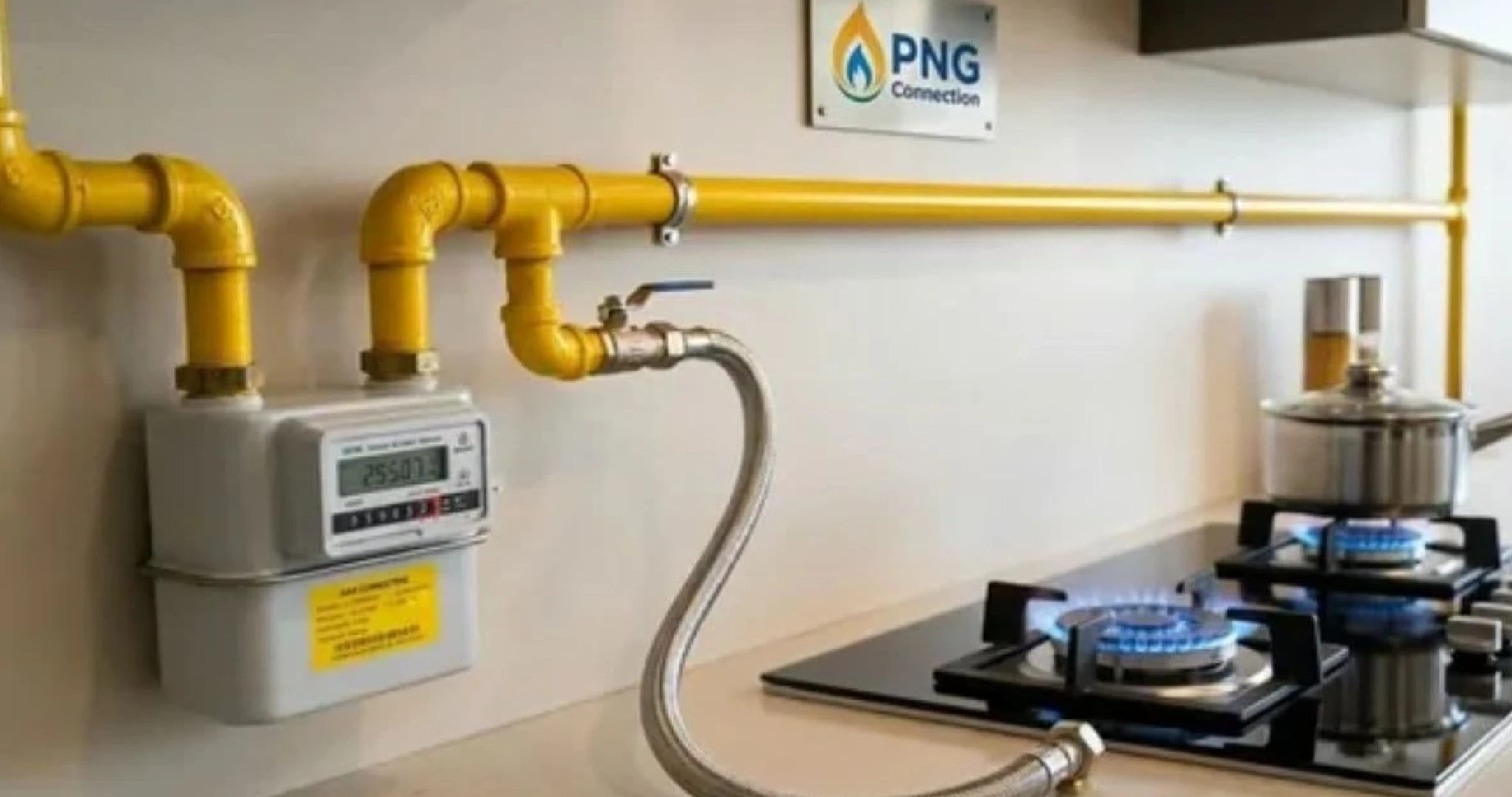
India’s government has issued a clear directive: households in areas with piped natural gas (PNG) access must switch—or risk losing LPG supply.
The Petroleum Ministry’s order, released Tuesday, mandates that consumers apply for PNG once notified by authorized entities.
- Failure to comply within three months will result in LPG supply being cut off.
- The rule applies where pipelines are already laid or gas supply is ready.
This marks one of the strongest policy nudges yet toward urban gas network adoption.
Why the Sudden Push?
The move comes amid an LPG supply crunch, driven largely by the ongoing West Asia conflict, a key sourcing region.
PNG offers a more stable alternative.
- It reduces dependence on imported LPG shipments.
- It ensures uninterrupted supply via domestic pipeline networks.
Think of it as shifting from bottled water deliveries to a direct tap connection—less disruption, more reliability.
Exceptions: Where LPG Will Continue
The government has carved out a narrow exception.
- LPG supply will continue in areas where PNG is “technically infeasible.”
- Consumers must obtain a no-objection certificate (NOC) to qualify.
This ensures rural or hard-to-connect zones are not abruptly impacted.
Infrastructure Push Gains Momentum
The order falls under the Essential Commodities Act, 1955, giving it legal weight and urgency.
India has already authorized City Gas Distribution (CGD) networks in 307 geographical areas.
- As of now, 9,046 PNG connections span 110 areas, indicating early-stage but expanding adoption.
- The framework also aims to cut delays in land access and approvals, a long-standing bottleneck.
Will this finally unlock faster last-mile gas connectivity?
LPG Allocation Adjustments Amid Crisis
To manage the ongoing crunch, the government has tweaked LPG supply allocations.
- 20% commercial LPG supply restored initially.
- Additional 10% linked to PNG reforms proposed.
- Another 20% allocated to states, taking total to 50% supply restoration.
Officials stress that refineries are running at high capacity, with adequate crude and fuel stocks nationwide.
Crackdown on ‘LPG Surcharge’ by Restaurants
In parallel, regulators are tightening consumer protections.
The Central Consumer Protection Authority (CCPA) has warned businesses against adding charges like:
- “LPG charge”
- “Gas surcharge”
- “Gas crisis fee”
Such add-ons are deemed unfair trade practices, as fuel costs are part of standard operating expenses.
Ports Offer Relief Amid Export Disruptions
The shipping sector is also feeling the ripple effects of the West Asia crisis.
Ports, including Mundra Port, have rolled out relief measures:
- 15 days of free storage for affected containers
- 80% waiver on reefer charges
- Waivers on transport and handling fees
These steps aim to ease pressure on exporters facing stalled shipments.
TL;DR
India will cut LPG supply to households that refuse to switch to PNG in connected areas within three months. The move responds to West Asia-driven supply disruptions while accelerating cleaner fuel adoption and gas infrastructure expansion nationwide.
AI Summary
- LPG supply tied to mandatory PNG adoption in connected zones
- 3-month deadline after notification
- Driven by West Asia supply disruptions
- Exceptions for technically infeasible areas
- Crackdown on LPG surcharges by businesses