








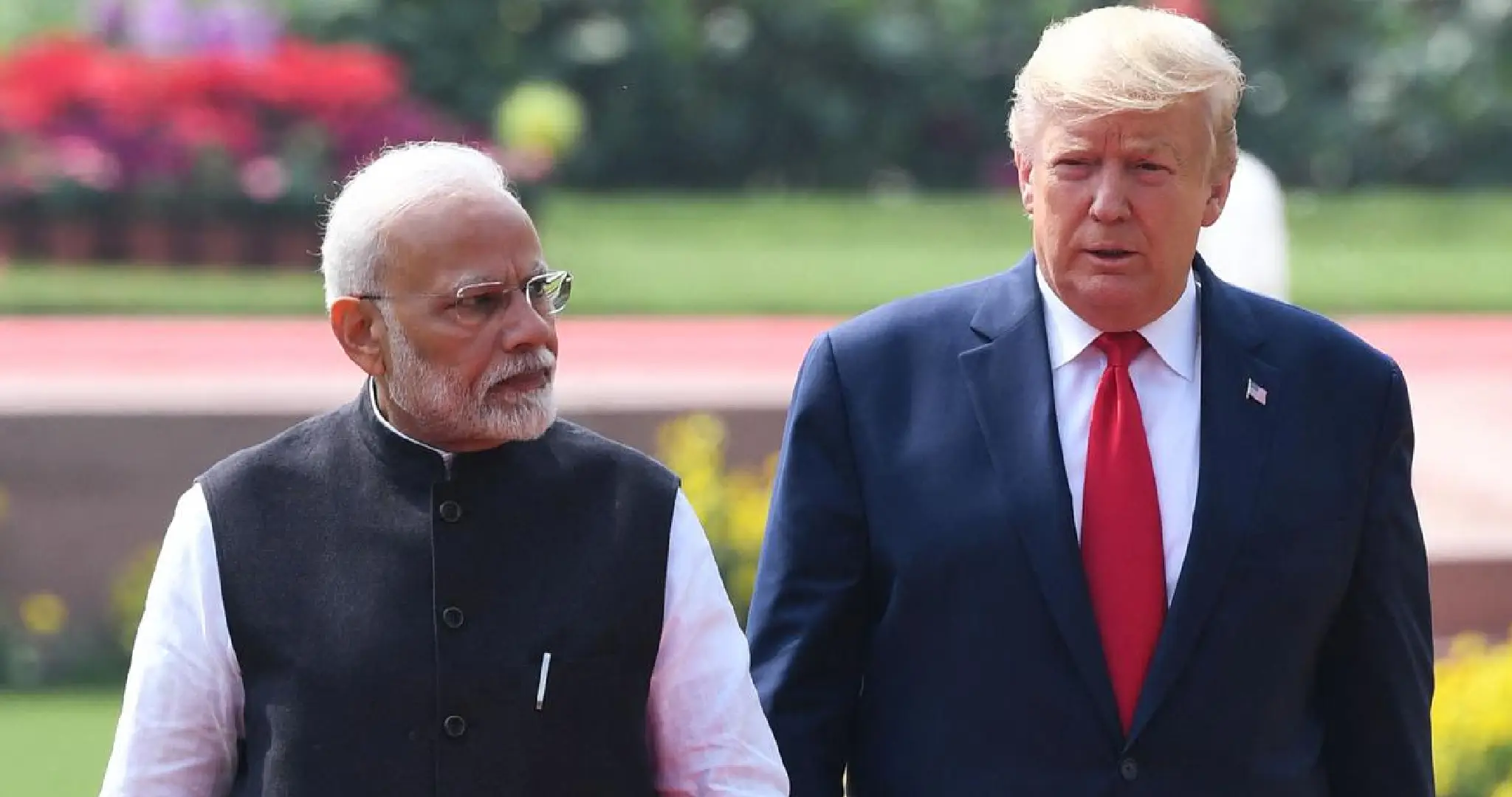
Tariffs on Indian exports set to drop sharply as New Delhi commits to $500B US purchases
India and the United States will sign the first tranche of a formal, legally binding trade agreement by mid-March, marking a major reset in bilateral commerce. The announcement came from Commerce and Industry Minister Piyush Goyal, following progress on a joint statement expected within days.
Trade breakthrough with immediate tariff relief
Why does this matter now? Because tariffs are about to fall—fast.
A joint India-US statement will be issued within four to five days, crystallising the first phase of the deal.
- It will be followed by a White House executive order reducing US tariffs on Indian exports to 18% from 50%.
- The cut reverses punitive duties imposed last year, including a 25% levy linked to India’s Russian oil purchases.
Think of it as reopening a partially blocked highway for exporters—same destination, far less friction.
Formal agreement to follow within weeks
What turns intent into law?
Based on the joint statement, officials will draft a formal legal agreement, a process expected to take four to six weeks.
- “We aim to sign the formal agreement by mid-March,” Goyal said.
- Only after signing can India adjust tariffs, since its rates are bound under most-favoured-nation (MFN) rules.
Once inked, the pact will legally empower New Delhi to eliminate or reduce tariffs on agreed products.
Ninth trade deal in five years
Is this an outlier—or part of a pattern?
The US agreement will become India’s ninth trade deal in five years, underscoring an accelerated push for market access.
- Talks with Washington formally began in March last year.
- Momentum picked up after a call between Prime Minister Narendra Modi and US President Donald Trump earlier this week.
Trump publicly confirmed the deal, signalling Washington’s political buy-in.
$500 billion ‘buy American’ commitment
Why is the US signing on so quickly?
India has committed to purchasing $500 billion worth of US goods over five years, spanning:
- Energy (oil, gas, coal, nuclear inputs)
- Aviation (aircraft, engines, spares)
- Technology (chips, servers, data-centre equipment)
- Precious metals and diamonds
Goyal noted that Boeing aircraft orders alone total $70–80 billion, crossing $100 billion once engines and parts are added.
- Another $20 billion will go into tech products for data centres.
- Budget concessions for data centres could drive $100–150 billion in related investments.
It’s less a shopping spree, more a supply-chain hedge.
Strategic diversification, not dependency
Is India over-reliant on the US?
Commerce department data suggests otherwise. India already imports over $300 billion annually in these categories worldwide, projected to reach $2 trillion in five years.
- Sourcing $500 billion from the US simply diversifies suppliers and strengthens resilience.
- Goyal told Parliament that India’s developed-nation ambition demands massive capacity expansion in energy, aviation, data centres, and nuclear power—areas where the US leads.
Trade flows underline urgency
The numbers explain the push.
In FY2024–25, India exported $86.5 billion worth of goods to the US, its largest export destination.
- Imports from the US stood at $45.6 billion, leaving ample headroom for growth.
Lower tariffs could quickly amplify this corridor.
TL;DR
India and the US will sign the first tranche of a formal trade agreement by mid-March. A joint statement due in days will trigger a White House order slashing US tariffs on Indian exports to 18% from 50%. India will follow with tariff cuts after signing, alongside a $500B US purchase commitment.
AI summary
- Joint India-US trade statement due in 4–5 days
- US tariffs on Indian exports to fall to 18%
- Formal, legal pact targeted by mid-March
- India commits to $500B US imports over five years
- Deal boosts supply-chain resilience, not dependency